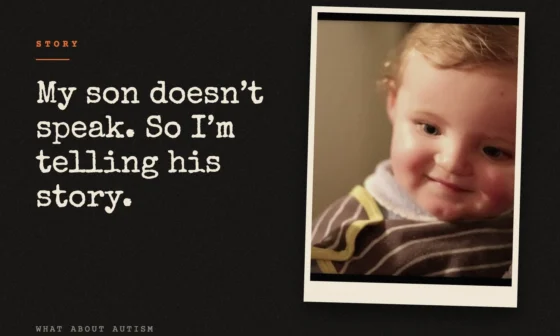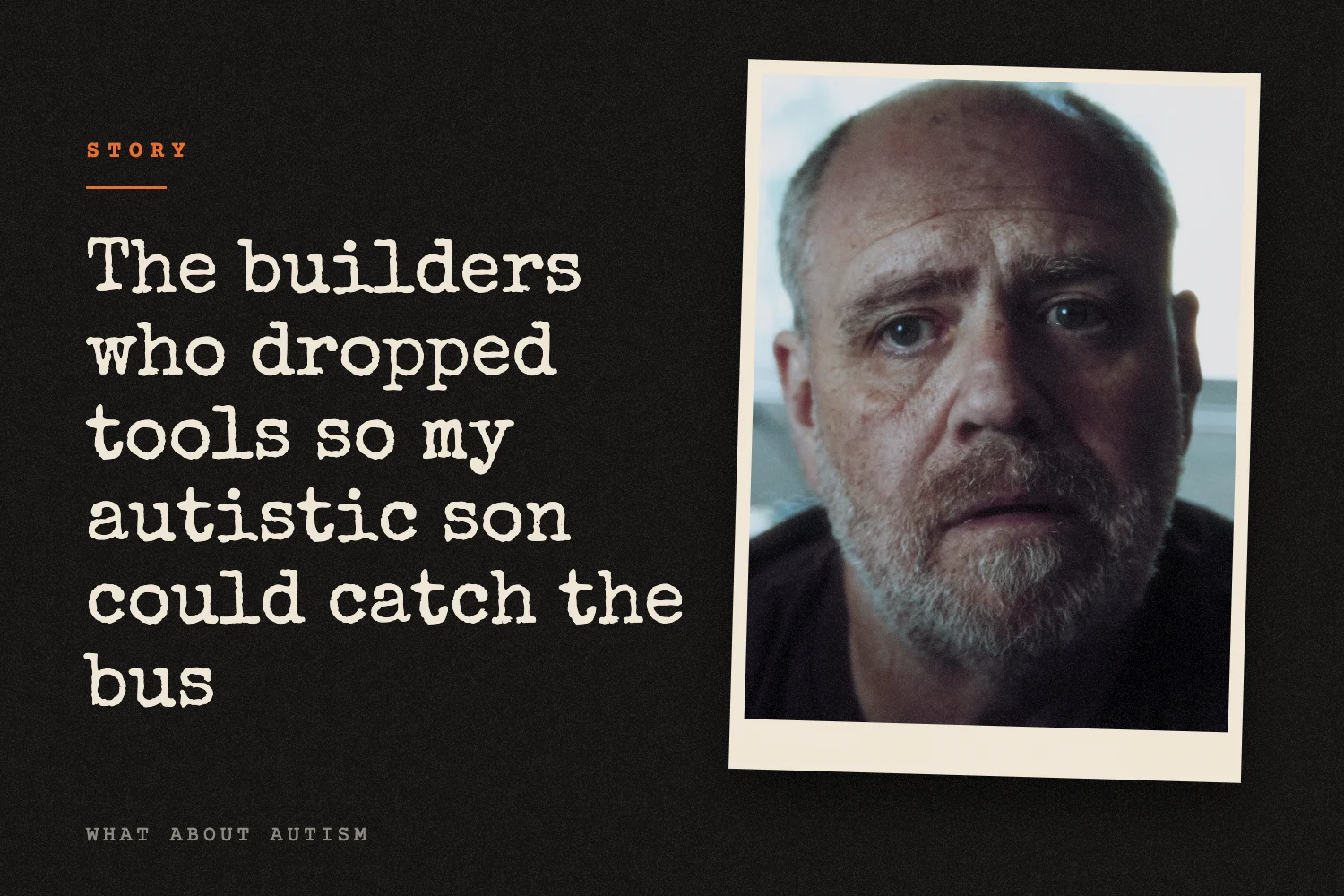
In early 2022, building noise from a renovation across the road stopped my son Eden, who is autistic and non-speaking with sensory processing disorder, from getting on his school bus. After eight or nine failed mornings I asked the builders to stop for five minutes. They didn’t flinch. For the next four months they dropped tools every morning until he was on the bus.
This is one of my favourite stories, because it isn’t about a system or a service. It’s about a bloke on a building site who said yes.
Noise and Eden
Eden is autistic, non-speaking, and he has sensory processing disorder. Noise is one of his big sensitivities. Sounds most of us tune out, like a nail gun, a saw or a compressor, can be overwhelming for him.
At the start of 2022 the house across the road was being renovated. Over the holidays the tool noise had been getting to him, on and off. Then school went back and his bus was coming on the Monday.
Eight or nine mornings
We tried to get him on that bus eight or nine mornings. Every time, the noise from across the road and the bus pulling up was too much. If he can’t get on the bus, he can’t get to school. And if he can’t get to school, one of us can’t work.
So I walked over and asked the boss on site.
“Would you guys mind just dropping tools for five minutes?”
He didn’t even flinch. Sure, no problem. We got Eden on the bus that morning.
Every morning for four months
Here’s the bit that gets me. It wasn’t a one-off. For the next four months they were on that site, they put their tools down every single morning and waited until Eden was on his bus. I’d give them a wave to say thanks. It was a beautiful thing to do.
Five minutes of quiet. That’s all it took. Most people would do it in a heartbeat if they knew. The problem is that most people don’t know, so they never get asked.
Worth knowing
Sensory differences, such as being over- or under-responsive to sound, light or touch, are part of how autism is diagnosed. For Eden, sudden loud noise is one of the hardest.
Diagnostic criteria (DSM-5)of primary carers of a child with disability had no help from organised services in the previous six months.
ABS, 2022If one morning goes wrong, it isn’t just a missed bus. It’s a missed school day and a parent who can’t go to work.
Our experienceSmall things that make a big difference
- If you’re making noise near a family like ours, askA short pause at drop-off or pick-up time can be the difference between a good day and a lost one.
- If you’re the parent, ask tooI nearly didn’t. Most people say yes when they understand why.
- Say thanksA wave every morning. Kindness that’s noticed tends to keep going.
Questions people ask
What is sensory processing disorder?
It describes a difference in how the brain takes in and responds to sensory information like sound, touch and light. For many autistic people some sounds are overwhelming or even painful, while other sensations are actively sought out.
What does non-verbal or non-speaking autism mean?
It means an autistic person doesn’t use spoken words to communicate, or uses very few. It does not mean they don’t understand. Eden communicates with his hands, his sounds, his face and by leading us to what he wants.
Keep reading
Follow our story
If this meant something to you, the best thing you can do is subscribe and share it with someone who has never lived with autism. That is who I am making this for.
Sources
- Australian Bureau of Statistics, Children and young people with disability, 2022 (released April 2025).