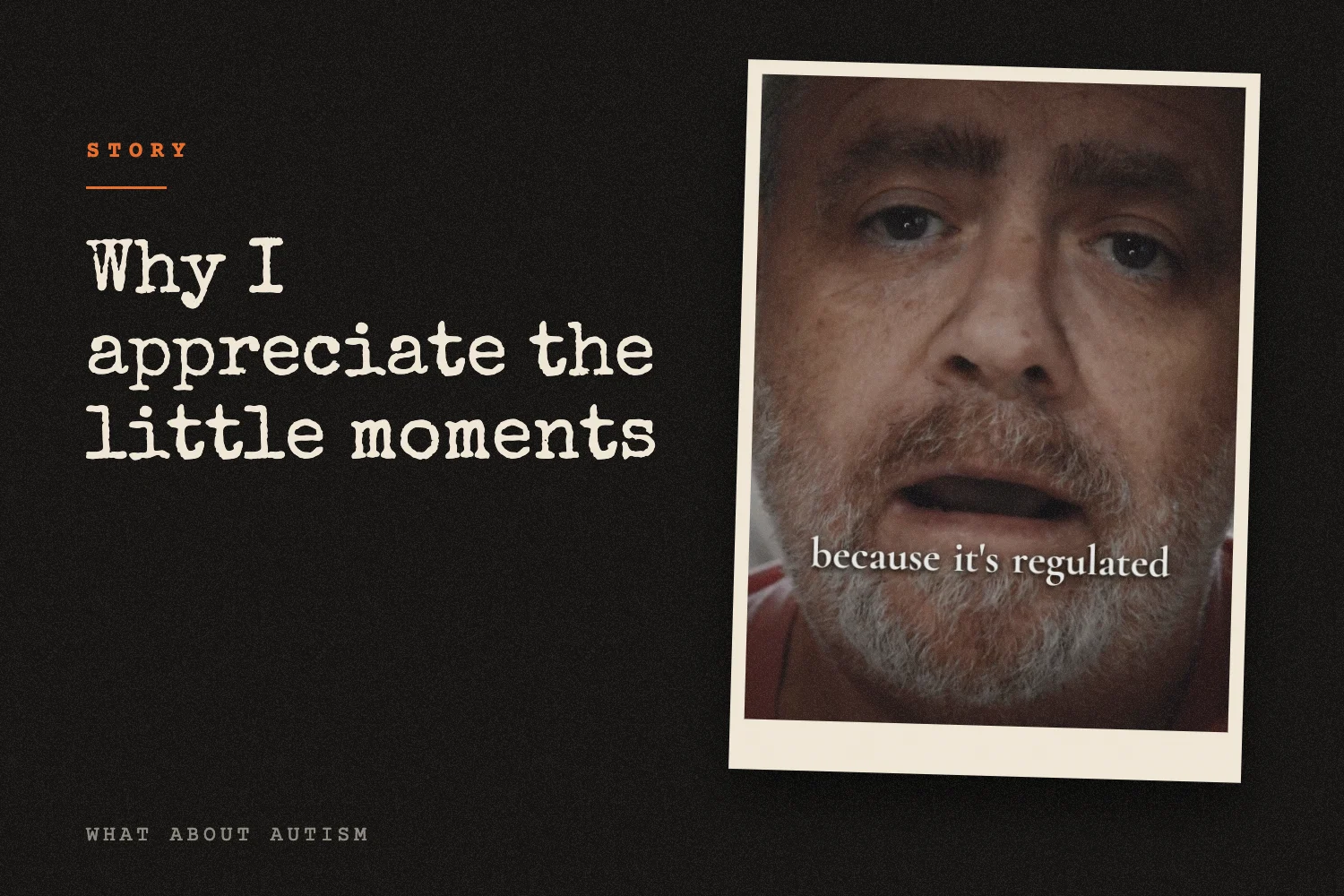
Saturday mornings on the lounge are my favourite time with my son Eden, who is autistic and non-speaking. After a week at school he’s regulated and we get real one-on-one time. He reaches for my beard because it’s a sensory thing, and he seeks deep pressure, so we cuddle with a big tight squeeze. When he’s stimming hard I keep my distance, because getting close can overload him.
Saturday mornings on the lounge with Eden. After a week at school, this is our time. It’s my favourite time as well.
The stubble
Since he was a baby, Eden has reached for my beard and stubble. It’s sensory. Sometimes it calms him down. Sometimes it winds him up. Either way, it’s his way of connecting.
The squeeze
Eden seeks pressure. So we cuddle with a big, tight squeeze. For him, a gentle little hug isn’t much. A firm one settles him.
When I can’t go near him
This is the part that’s hard. When Eden’s stimming hard, I can’t go near him. Getting close can overload him. Everything in me wants to go and hold him, and the right thing is to give him space.
So I make the most of the moments when he’s regulated. Like Saturday mornings.
He understands more than I thought
Eden is non-speaking, but I talk to him all the time. Lately I get the feeling he understands way more than I ever thought.
Worth knowing
Some autistic people actively seek certain sensations, like deep pressure, textures or movement. It can help them feel calm and organised.
Our experienceThe same person can also be overwhelmed by other input, like noise or being crowded. Eden seeks pressure but struggles with sudden noise.
Our experienceStimming, such as rocking, flapping or repeating sounds, often helps an autistic person regulate. It isn’t something to stop for the sake of it.
Our experienceReading the moment
- Watch firstIs your child calm and open, or wound up? The same hug can help one minute and overwhelm the next.
- Offer, don’t imposeLet them come to you for touch and pressure. Eden pats the seat when he wants me beside him.
- Protect the good timesFind the time of the week when your child is most settled and guard it.
Questions people ask
What is sensory seeking in autism?
It’s when a person actively looks for certain sensations, such as deep pressure, touch, movement or particular textures, because that input helps them feel regulated.
Should you stop an autistic child from stimming?
Generally no. Stimming often helps an autistic person cope with sensory input or emotion. Step in only if it’s causing harm. For Eden, giving him space while he stims is the kindest thing.
Keep reading
Follow our story
If this meant something to you, the best thing you can do is subscribe and share it with someone who has never lived with autism. That is who I am making this for.