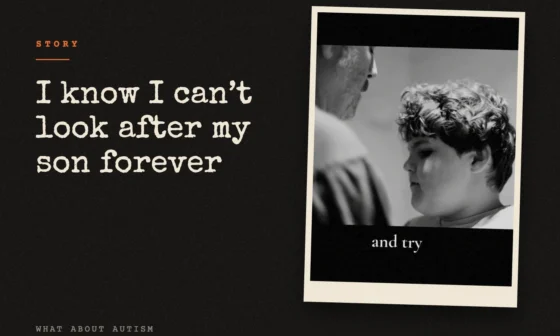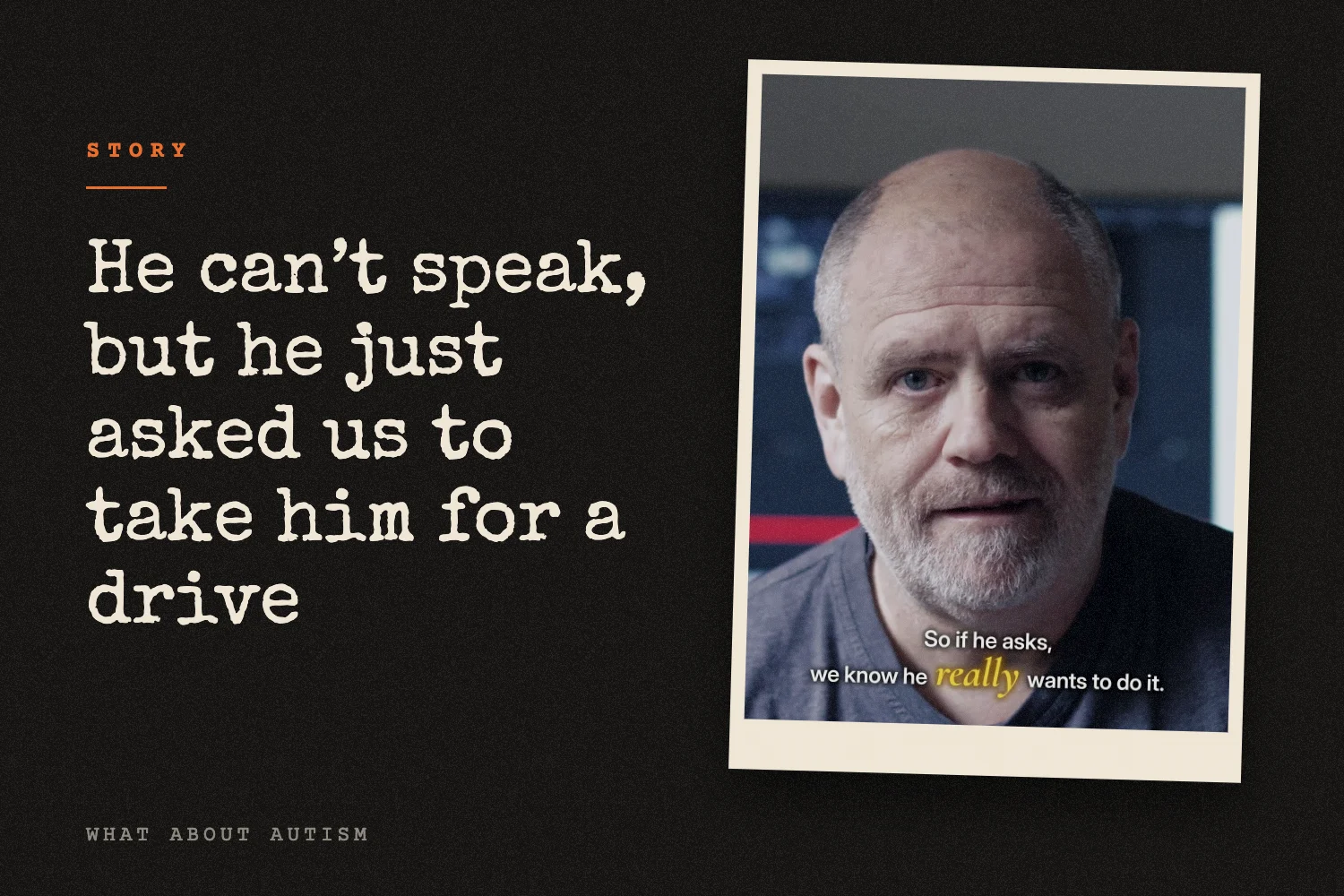
My son Eden is 13, autistic and non-speaking. For the first time in his life, he asked us to take him for a drive. He moved my hand to the front door handle, walked to the car and put his mum’s hand on the car door. Normally the car overwhelms him. This time he laughed, smiled and settled in to watch the world go by.
For thirteen years, we’ve decided where Eden goes.
That day, he decided.
How he asked
Eden took my hand and moved it to the front door handle. Then he walked straight out to the car and put his mum’s hand on the car door.
No words. Completely clear.
He’d only ever asked to go for a walk once before. Most of the time we more or less have to coax him out of the house.
Why the car is a big deal
Eden is normally scared in the car. Things going past the window too fast can overload his senses. So we didn’t know what we’d get.
He laughed. He smiled. Then he went quiet and peaceful and just watched the world go by.
What this is
If you’ve never lived with non-speaking autism, this is one small window into it. Communication isn’t only words. It’s a hand placed on a door. It’s a child taking you exactly where he wants to go.
We’re seeing more of this lately. He’s asking for things. Every one of them feels like a door opening.
Worth knowing
Guiding someone’s hand to what you want is a common way non-speaking autistic people make a request. It’s deliberate communication.
Our experienceMovement, fast-changing visuals and engine noise in a car can be a lot for a child with sensory processing differences.
Our experienceResearchers say the language capacity of non-speaking autistic people has been seriously underestimated.
Jaswal et al., 2024How to notice a non-speaking request
- Watch where they take youBeing led to a door, a fridge or a screen is often a clear request.
- Pause before you redirectGive the moment a few seconds. You might be interrupting an ask.
- Say yes when you canWhen an ask gets answered, kids learn that asking works.
Questions people ask
What does non-verbal or non-speaking autism mean?
It means an autistic person doesn’t use spoken words to communicate, or uses very few. It does not mean they don’t understand. Eden communicates with his hands, his sounds, his face and by leading us to what he wants.
How do non-speaking autistic people communicate?
In lots of ways: leading someone by the hand, gestures, sounds, facial expression, pictures, devices and spelling or typing. Eden mostly uses his hands, sounds and by taking us to what he wants.
Keep reading
Follow our story
If this meant something to you, the best thing you can do is subscribe and share it with someone who has never lived with autism. That is who I am making this for.
Sources
- Jaswal VK et al., Autism, 2024; University of Virginia, study reveals unexpected literacy in autistic people who cannot speak (March 2024).